|
Sikkim,
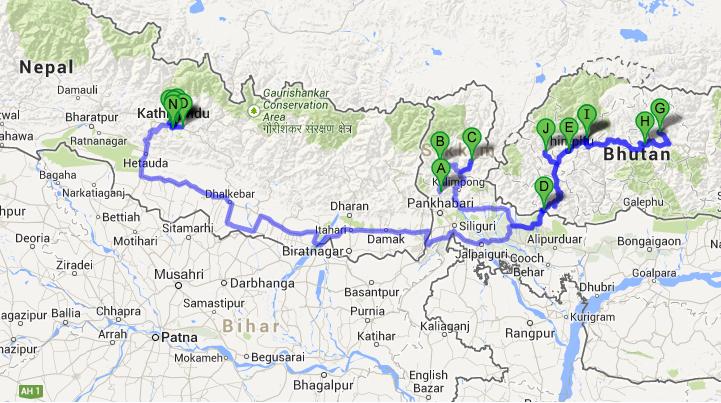
Bhutan and Nepal tour is an ideal combination to experience Sikkim,
Nepal and Bhutan. In the first part of this Tour we experience India
from its most beautiful side as travellers are fascinated by the
beauty of the Indian state Sikkim. In the second part of our Sikkim,
Bhutan and Nepal tour we visit Bhutan. Bhutan is an extraordinary
place hardly touched by the hands of time. Nestling in the heart of
the great Himalaya, Bhutan remained in self-imposed isolation for
centuries. Since Bhutan doors were cautiously opened in 1974,
visitors have been mesmerized by the environment, the scenery and
architecture in Bhutan is awesome. In the third part of the tour we
explore Nepal with complete dedication. Nepal is the only Hindu
Kingdom where middle age traditions and culture are still alive. The
Kathmandu Valley of Nepal, which is the cultural and political
center of Nepal, is magnificent for its wealth of unique temple.
Visitors are delighted to see the Magnificent Palaces in Nepal which
count to the world cultural heritage (UNESCO monuments).
The
fertile soil of Nepal at the foot of the highest mountain of
the world has a wide range of art and cultural monuments to
offer making this part of the tour exciting and fascinating.
The Team of Indo Vacations welcome you to visit India, Bhutan
and Nepal. You can be assured that your holidays in India,
Bhutan and Nepal will be an unforgettable experience for
lifetime. |
|
Day 01.
Flight to India (Delhi)
Around midnight arrival in
Delhi.
The cosmopolitan City and capital Delhi is the main gateway
for travelers. You are met by an Indo Vacations representative
and transferred to your Hotel.
Day
02. Delhi - Bagdogra (by air) - Darjeeling (about 100 km)
Late
morning flight from Delhi to
Bagdogra. After the arrival in
Bagdogra we proceed north of the state through the coniferous
forests and terraced tea gardens and arrive in
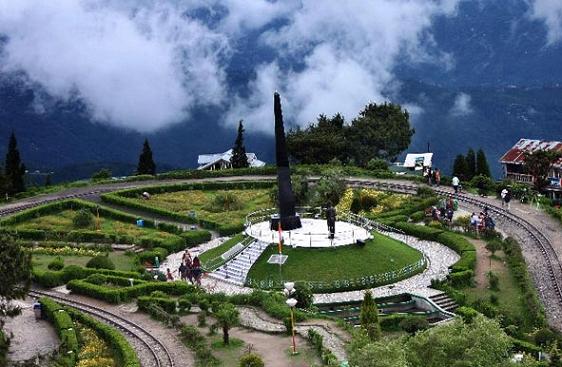
Darjeeling. Darjeeling (place
of the thunderbolt) have spectacular scenery. Due to its altitude of
2134 m and soothing temperature in Summer Darjeeling has become a
famous hill resort in India. By clear weather we can enjoy the
impressive and unforgettable views of
Himalayas.
Day
03. Darjeeling Excursion: Tiger Hill
Very
early in the morning we drive to Tiger Hill (around 11 km.,1 hour)
to enjoy the sunrise at the Tiger hill. Tiger hill (2590 m.) is the
highest point in this area. There is a breathtaking view of the
sunrise on Kangchendzonga.
Mount Everest (8842) is also
visible on a clear day. The moments of sunrise from Tiger Hill are
described by most of the visitors as unforgettable. In the afternoon
we explore Darjeeling and its surroundings. We visit the village
Lablong and the institute of mountaineering where we get the
detailed information about the natural surrounding and its habitants
of this area.
Day 04.
Darjeeling -
Pemayangtse (about 260 km)
Today we leave the state
West Bengal and enter into
Sikkim. Sikkim is the second
smallest state in India. Sikkim, in the East Himalayas is sandwiched
between Nepal to its West and Bhutan to the East. In the North is
Tibet/China. Sikkim has so rich of flora, fauna and a diverse
ethnic and cultural population as no other state in India. We drive
through the forests and tea gardens and proceed to our today's
destination
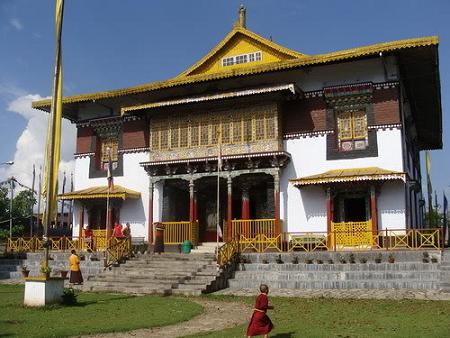
Pemayangtse
(The perfect Sublime Lotus). We visit the headquarter of the
Nyingama sect in Pemayangtse.
Day 05. Pemayangtse
(Pelling) - Tashiding - Pemayangtse
We shall have an excursion today to the monastery belonging to the
Nyingmapa order which is known as
Tashiding. The monastery of
Tashiding lies nestled on the top of a hill that looms up between
the Rathong river and the Rangit river and is surrounded by a
profusion of Prayer flags that flutter in the air. There are also
many chortans dedicated to some Chogyals and some religious
personalities of Sikkim. Carved skillfully on stone plates
surrounding the monastery are holly Buddhist mantras like "Om Mane
Padme Hum" by the master crafts man Yanchong Lodil. Overnight stay
in
Pelling.
|
 |
 |
|
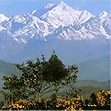
Darjeeling |
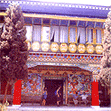
Pemayangtse Monastery |
|
|
Day 06.
Pemayangtse (Pelling)
- Gangtok (about 200 km)
Today we drive through wonderful landscaping to
Gangtok, the capital city of the
former Royal state of Sikkim. Rest of the day is free to relax
though it is advised not to miss to have walks in the local markets.
Day
07. Gangtok Excursion: Enchey monastery
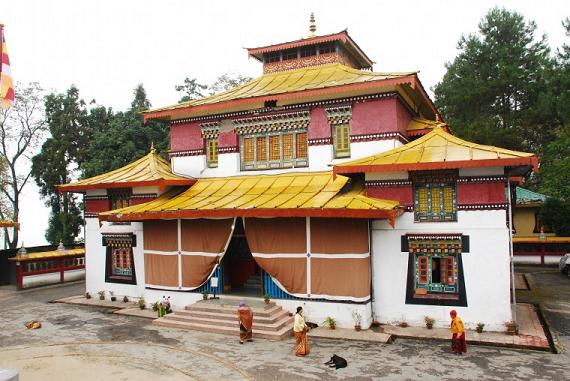
Today we drive to the
Enchey
monastery.
This monastery is believed to be 200 years old. The monks of this
monastery belong to the
Mahayana Buddhism.
After the visit of Enchain monastery we proceed to
Martha Village-Resort, where we have afternoon at leisure.
Here one can have nice walks or have a ride on the local horses of
this area.
Day
08. Gangtok Excursion: Rumtek monastery
Today we
visit the unique
Research Institute of Tibetology
on a hilltop which was established in 1958 to promote research on
Tibet and Mahayana Buddhism.
Here we will see the biggest collection of Tibetan scripts and an
excellent collection of rare Tank has, bronze and cult objects. We
also visit
Orchid Sanctuary which is
laying south of the institute. This Sanctuary contains over 450
indigenous species. Sikkim is considered paradise for orchid lovers.
After the visit of sanctuary we walk through the bazaar of Bangkok
through the area of old palace and visit the monastery Gylwa. The
main attraction of our excursion remains today the monastery of
Rumtek.
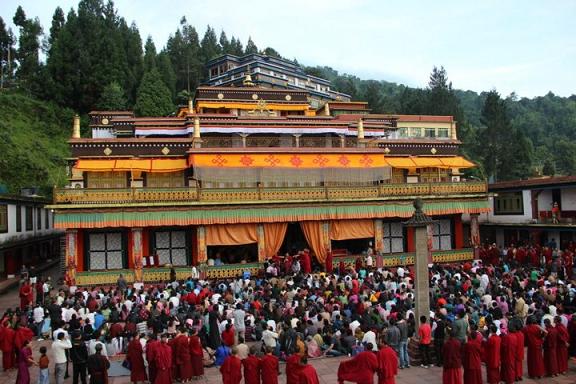
Rumtek
monastery
was built as a true copy of a tibetan monastery in recent years.
Armtek is the headquarter of Red hat sect of tibetan lamaistic
Buddhism.
Day 09.
Gangtok - Phuntsholing (about 150 km)
Today we have a long way ahead (around 8 hours) as we will be
leaving
India
and crossing the border between India and
Bhutan. After your immigration
formalities are cleared by the help of Indo Vacations representative
we shall proceed to the hotel on the Bhutanese territory. The rest
of the day at leisure at the hotel.
|
 |
 |
|
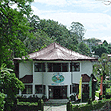
Enchey Monastery |
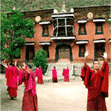
Rumtek Monastery |
|
|
Day 10.
Phuntsholing - Thimphu (about 231 km)
We have a drive today through the hilly area of Bhutan to
Thimphu, today's capital city of
Bhutan. In the evening there will be a welcome festival by the team
of Indo Vacations in the hotel.
Day 11.
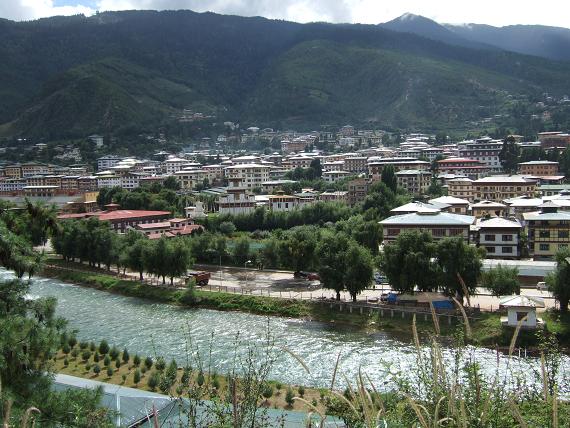
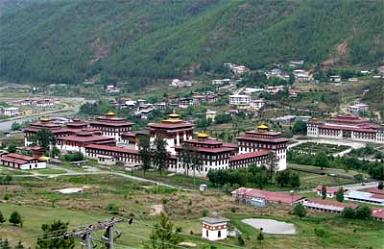
Thimphu
At 7,710 ft in the fertile valley of the
Wang chu river, the capital
Thimphu is an engaging blend of the old and the new. The capital's
most striking visual landmark is the magnificent Taschichho-Dzong,
which is the seat of the Royal Government and Central Monastic Body.
We visit today the national library to see the collection of rare
and precious collection of
Buddhism. Today we also visit a
painting school and the center of the traditional medicines. In the
evening we visit the Taschichho-Dzong and Memorial Chorten. The
postage stamps of Bhutan are very famous. Therefore we shall drive
to the main post office to see and buy the stamps for our postcards.
Day 12.
Thimphu - Phunakha
Today we drive to
Punakha. On the way to Punakha
we will cross the pass Dachu-La Pass (3100 m). At 4,300 ft Punakha
with its sub-tropical climate is Bhutan's ancient capital and winter
seat of the Central Monastic Body. Punakha has its own festive, the
Panache Douche that concludes with the
Sera, a colourful re-enactment of an episode of the war
against the invading Tibetans in the 17th century. The body of the
Shabdrung, who died in 1651 while in meditation at Punakha, is
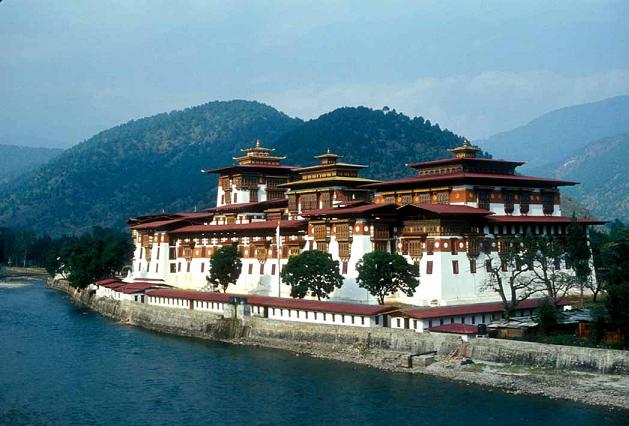
preserved at the Dzong. After our arrival in Punakha we shall visit
the unique Pungthang Decent Hording Dozing, built in 1637 by the
Shabdrung. The Dzong is situated on a triangular spit of land at the
confluence of the Mo chu and Pho chu river.
|
 |
 |
|
Thimphu View |
Punakha Dzong |
|
|
Day 13.
Punakha - Bumthang (about 200 km)
Today we will drive to
Bumthang. The valleys of
Bumthang are known for their beauty, temples and palaces of
historical significance. Bumthang offers some of the best treks in
Bhutan, ranging from easy walks in the idyllic countryside to
extended treks to explore hidden alpine valleys, where the warm,
unquestioning hospitality of the people and the pristine beauty of
the land belong to another age. Overnight stay in Bumthang.
Day 14.
Bumthang - Tongsa
Today we have enough time to discover the town of Bumthang. As
distances are not very long we will walk to some of the monasteries
(Lamey Gompa, the Lashings of Jape, Keri, Tasting Lashing). In the
afternoon we leave the tropical jungle area and drive through the
Auto-La pass (3400 m) to Tongsa. Overnight stay in
Tongsa.
Day 15.
Tongsa - Punakha
(about 70 km)
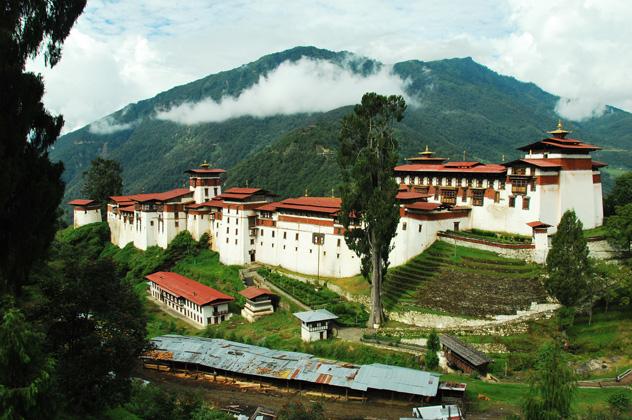
Ancestral home of Bhutan's ruling dynasty and site of Bhutan's most
impressive fortress, Tongs is a strategically located town on the
east-west route. The sprawling Dozing is built on a spur and the
view of the Mangle river valley extends for many kilometers. We will
visit the Doing of Tongs which is one of the most famous impressive
one in the country. In the afternoon we will drive again to Punakha.
Overnight stay also in Punakha.
|
 |
 |
|
Bumthang |
Trongsa Bhutan |
|
|
Day 16. Punakha
- Paro (about 180 km)
At 7,382 ft
Paro is the site of Bhutan's only
airport and is the most beautiful western valley. Besides the
colourful spring tsechu (festival), Paro has a number of sights and
monuments to enthrall the visitor. The pastoral beauty of Paro
valley, magnificent views of Mount Jhwmolhari, the incredible
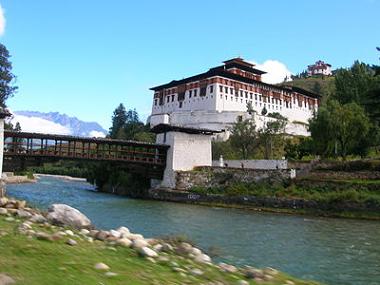
monastery of Tartan which clings to a sheer rock cliff, the ruins of
Drukgyel Dzong (fortress of the victorious Drupas) and the National
Museum, housed in an ancient watchtower, are a few of the
attractions that make Paro one of the high-points of any holiday in
Bhutan. If we happen to be during the festival time in Paro the
sightseeing of Paro will start in the early morning so that we enjoy
the most of the festival.
Day 17. Paro
Today we start our day by visiting the National Museum. After the
visit of the National museum we go for an excursion to
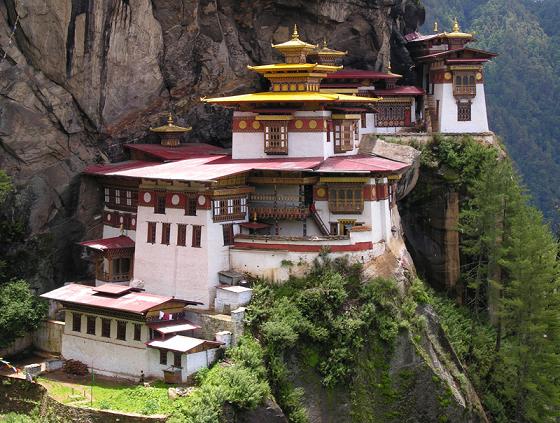
Takstang monastery. In
April 1998 a fire destroyed the main structure of Tatiana Monastery,
perhaps Bhutan's most photographed and famous site, perched on the
side of a cliff 900m (2952ft) above the valley floor. It is also
known as 'tiger's nest' because
Guru Rinpoche is said to
have flown to the site on the back of a tigress in the eighth
century. It has been one of the kingdom's most sacred sites ever
since, and will be rebuilt in its original style once an auspicious
date has been chosen.
|
 |
 |
|
Paro |
Paro |
|
|
Day 18.
Paro - Kathmandu (by
air)
Today we leave the country of dragons and drive early morning to the
airport. We fly with Bhutan Air from Paro to
Kathmandu. The rest of the
day is free to relax at Kathmandu.
Day 19.
Swayambhunath - Pashupatinath - Bodnath
In the morning we start our sightseeing by visiting Durbar Square.
Durbar Square is the
spiritual heart of Kathmandu. The old royal palace at the centre of
the city was surrounded by temples and other important buildings.
This is the most important point in Kathmandu to observe the culture
and religion of
Nepal. We also visit the temple
of living goddess Kumari. After Durbar Square we will visit
Swayambhunath. The Stupa at Swayambhunath is the most important and
oldest site of Buddhist worship in Nepal. Swayambhunath Stupa is
famous for the eyes of
Buddha which seem to observing the
world from all 4 directions. After Swayambhunath we visit Beneath.
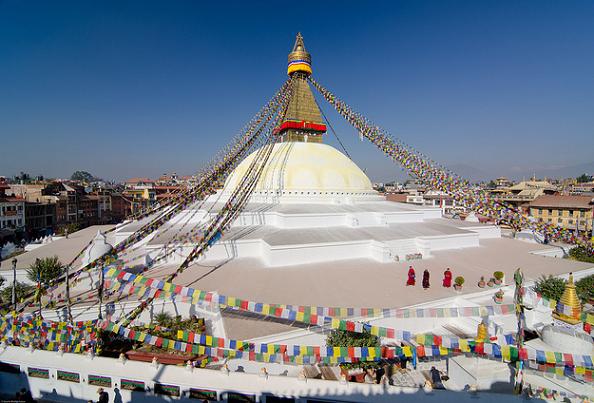
Beneath is the largest Stupa of Nepal. Around the octagonal base of
Stupa there are 108 images of Buddha where prayer ceremonies of
Buddhist Lamas are taking place since over 2000 years. Now we
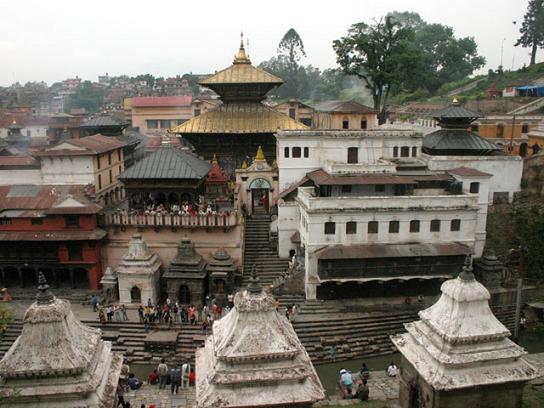
proceed to the temple city of Pashupatinath which is Nepal's most
important Hindu pilgrim site on the banks of the
Bagmati river. The temple of
Pashupatinath is dedicated to
God Shiva.
|
 |
 |
|
Pashupatinath Temple |
Boudhanath Stupa |
|
|
Day 20.
Patan - Bhaktapur
Today we drive to
Patan. Patan was the second
largest town in the valley but it has been absorbed into Kathmandu.
Patan was previously known as Lalitpur (the beautiful city). The
famous King Ashoka built the Stupas at four corners in the 250 BC.
The temple architecture here gave this city fame to be unique and
most beautiful. After Patan we proceed to Bhaktapur, the third
biggest city of the valley.
Bhaktapur has preserved it's
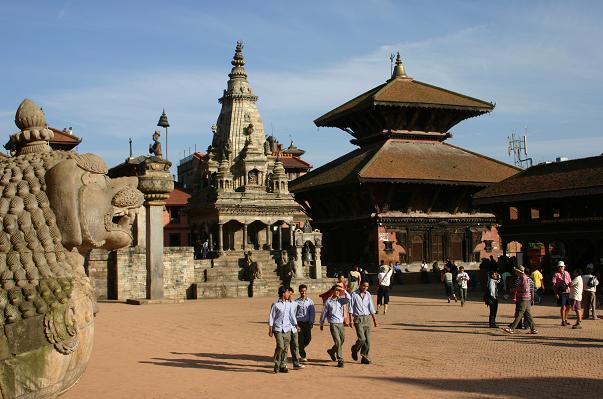
medieval character better than Patan. We visit the golden door, the
Palace of 55 windows (15th century) and Pagoda Nyatapola (18th
century).
Day 21.
Kathamandu - Delhi (by air) Excursion: Dakshin Kali
Today we drive to Dakshinkali. On the way we pass through the
villages and small localities. Today we see the rural area where
most of the people make their living by cultivating their fields.
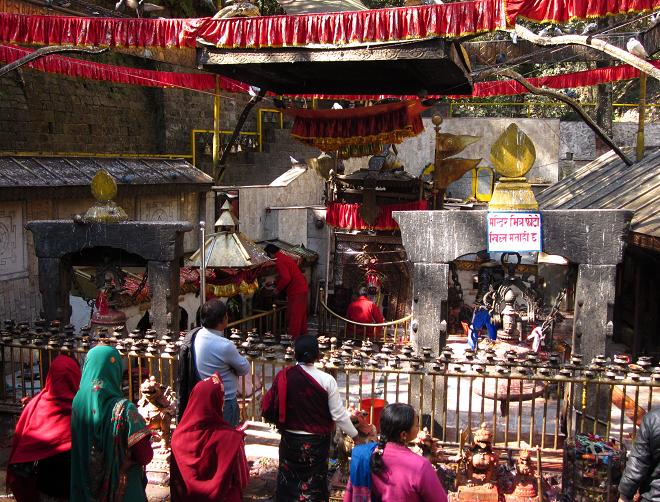
The temple of
Dakshinkali is a place
of pilgrimage for Hindus where animals sacrifices for the goddess
Kali are still performed. In the Afternoon Flight to Delhi.
|
 |
 |
|
Durbar Square Bhaktapur |
Dakshinkali Nepal |
|
|
Day 22. Delhi -
Flight Back Home
Around Midnight flight back to home destination.
Tour Reservation
To
get more information or to book this tour please submit the
Query
Form
or send us an
e-mail
! Your booking will be activated only after we get a reconfirmation
from your side.
About
Hotels:
We
provide you the accommodation as per your budget mentioned above in
the table of hotels category for any of the booked tour. Hotels
provided by us are from budget to luxury class hotels. Luxury hotels
are all five stars or of above standard. Deluxe would be a
combination of 3 and 4 star Hotels and standard would be a
combination of 2 and 3 star or similar hotels. The criteria for
selecting hotels by us remains the best value of your money. We also
provide you wherever possible accommodation in heritage hotels.
Heritage Hotels are old Palaces, Forts and Grand mansions of
Maharajas which have been later renovated and converted into Hotels.
Rooms are decorated all individually. Rooms are comfortable,
romantic and present the flair of olden Maharaja days.
Our
Services Include:
 Accommodation in double rooms on twin sharing basis with bath and WC
in the
Accommodation in double rooms on twin sharing basis with bath and WC
in the
chosen category.
Rooms
on the departure day.
American/continental Breakfast.
Services of qualified local guides (English speaking or languages of
your choice)
at every place of sightseeing.
All
Transfers and departures on arrival and departure by Indo Vacations
representative.
All Transfers and Sightseeing throughout the tour by an
air-conditioned Car with
driver. For groups an
individual air-conditioned bus (Except Standard Hotels) will be
provided.
Exclusions:
Any Kind of Personal Expenses such as Tips, Laundry, Telephone Bills
and Alcoholic
beverages.
Camera Fees (Still or Movie).
Any
Flight Charges.
Monument Entrances.
Unspecified Meals etc.
We always look forward for any changes in the itinerary as wished
by you for your
individual trip.
|
|
If you are willing to travel in a group - the
Group
Departure dates are available
! |
|
Visit
Sikkim Tours for more Tours &
information on Sikkim ! |
|
If you
are a group over 15 people please
e-mail us with the number of participants
and the wished
dates to enable us to workout the tour
cost ! |
|
Please have a
look at our
References
to read the testimonials of tourists & guest
who have traveled with us. |
|
Please
also check our
FAQ
page to get more information. |





 Chat
Chat